Inflation

5 charts

Energy pushes euro-area inflation to 4.0%
Energy pushes euro-area inflation to 4.0%
InflationPublished

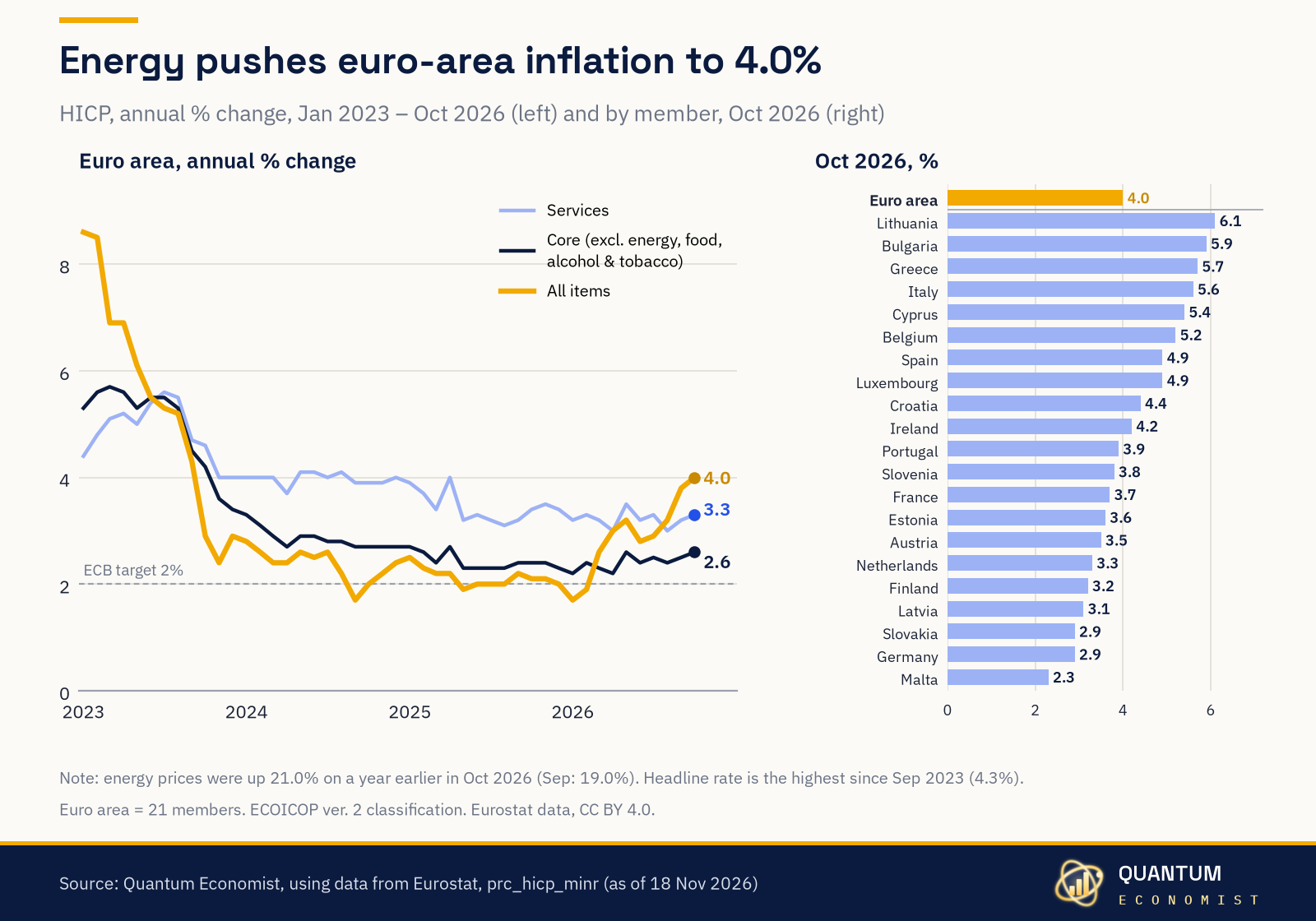
Euro-area inflation rose to 4.0% in October 2026 from 3.8% in September, its highest since September 2023. Energy prices were 21.0% higher than a year earlier, while core inflation edged up to 2.6% and services to 3.3%. Lithuania (6.1%) and Bulgaria (5.9%) had the highest rates and Malta (2.3%) the lowest.

· Source: Quantum Economist, using data from Eurostat. Eurostat data, CC BY 4.0.
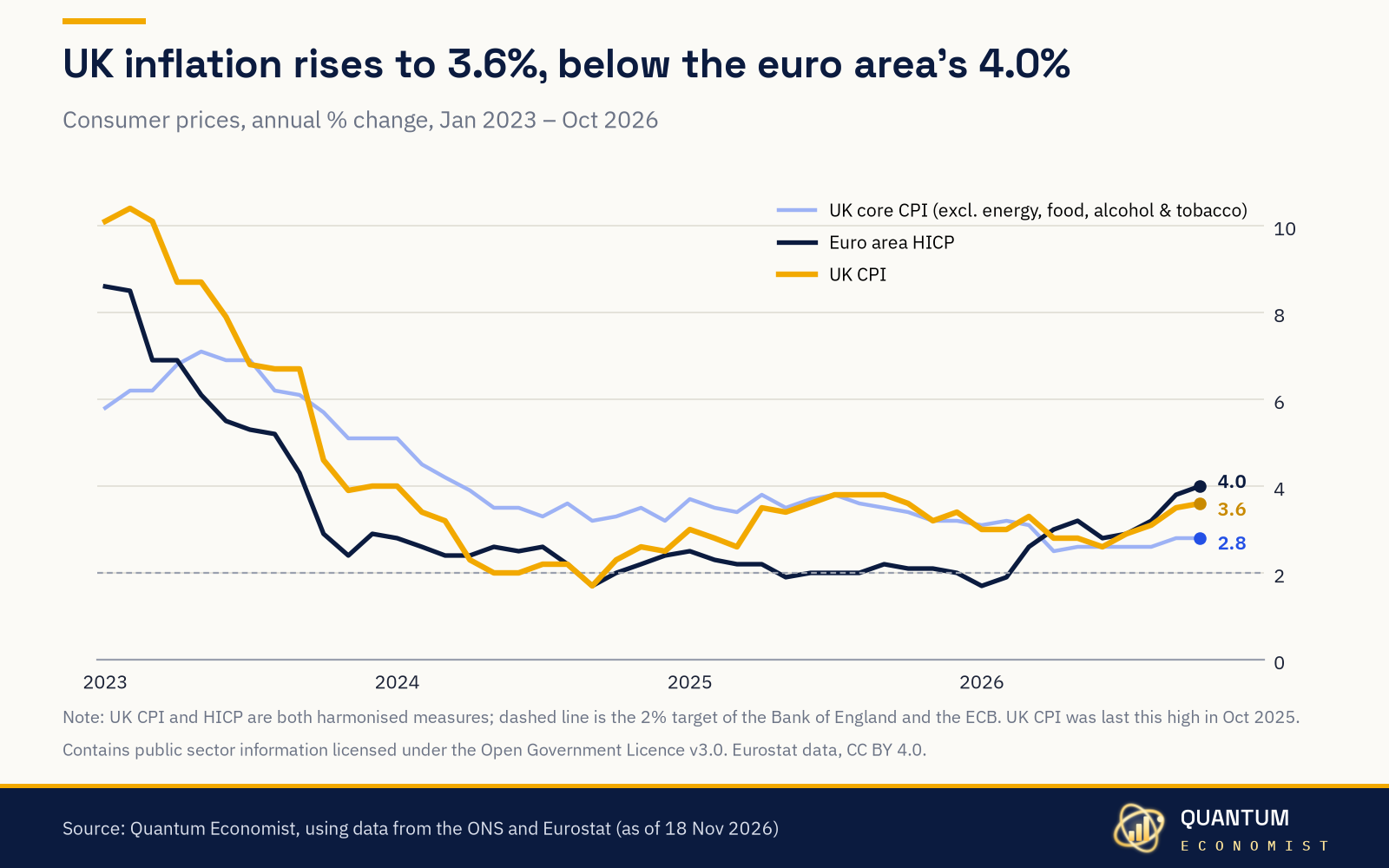
UK inflation rises to 3.6%, below the euro area's 4.0%

UK inflation rises to 3.6%, below the euro area's 4.0%
InflationPublished

UK consumer-price inflation rose to 3.6% in October 2026 from 3.5% in September, its highest since October 2025. Core inflation held at 2.8%. Euro-area inflation, at 4.0%, has been above the UK rate since August.

· Source: Quantum Economist, using data from the ONS and Eurostat. Contains public sector information licensed under the Open Government Licence v3.0. Eurostat data, CC BY 4.0.

Energy drives euro-area inflation to 4%, twice the ECB's target

Energy drives euro-area inflation to 4%, twice the ECB's target
InflationPublished

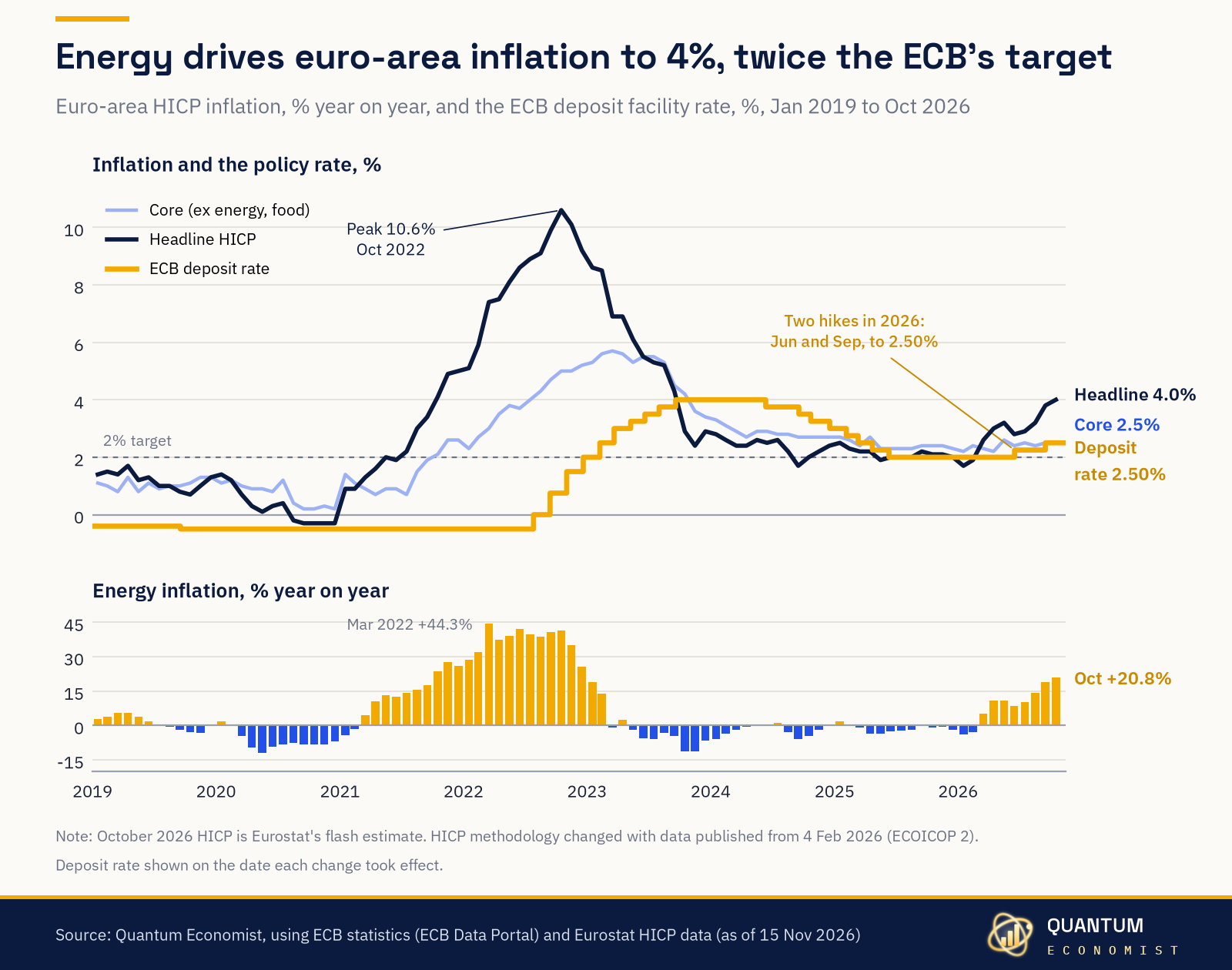
Euro-area inflation reached 4.0% in October on Eurostat's flash estimate, with energy prices up 20.8% on a year earlier. The ECB has raised its deposit rate twice this year, to 2.50%, but policy is still loose once inflation is taken into account.

· Source: Quantum Economist, using data from the ECB Data Portal and Eurostat

Dutch pay rises are only just keeping up with prices again

Dutch pay rises are only just keeping up with prices again
InflationPublished

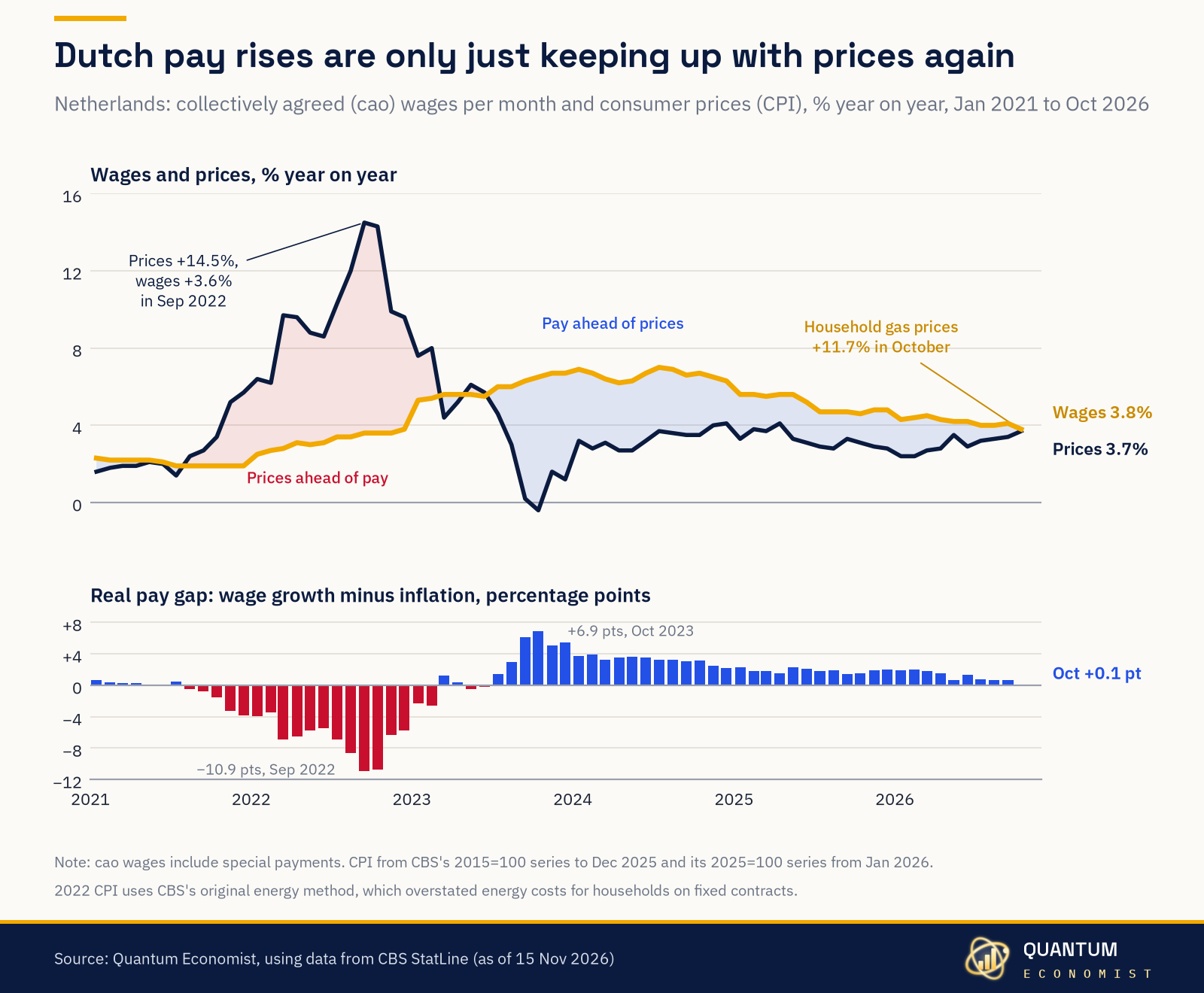
Dutch collective-agreement wages were 3.8% higher in October than a year earlier, while consumer prices rose 3.7%, so real pay growth is down to just +0.1 point from +6.9 points at the October 2023 peak. Household gas prices, up 11.7% on a year ago, are eating the gain.

· Source: Quantum Economist, using data from CBS StatLine

World food prices are climbing again, and shop prices tend to follow

World food prices are climbing again, and shop prices tend to follow
InflationPublished

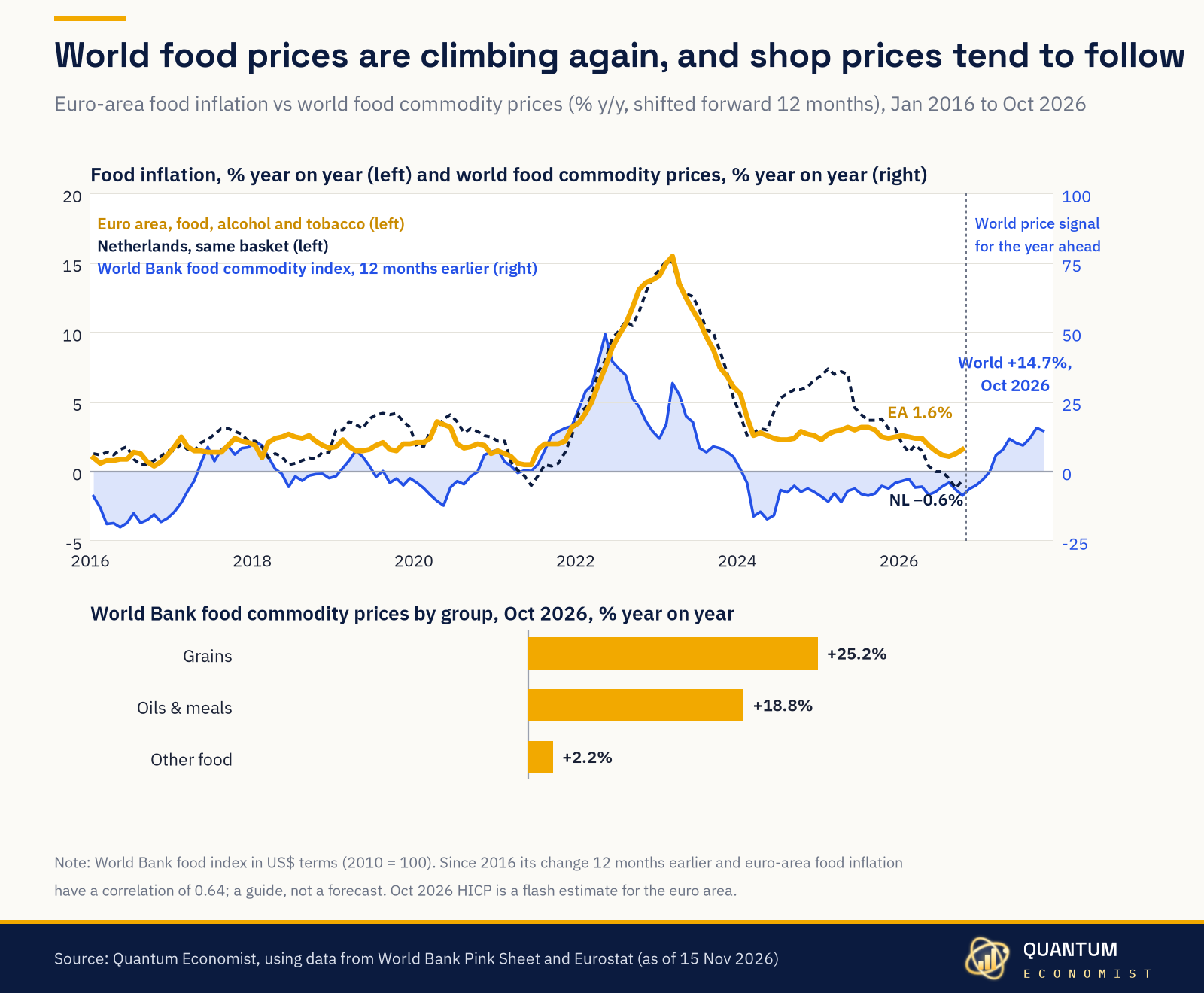
The World Bank food commodity index is up 14.7% on a year ago, led by grains (+25.2%), but euro-area food inflation is only 1.6% and the Dutch rate is −0.6%. Since 2016 world prices have led shop prices by about a year, which points to firmer supermarket prices in 2027.

· Source: Quantum Economist, using data from the World Bank Pink Sheet and Eurostat